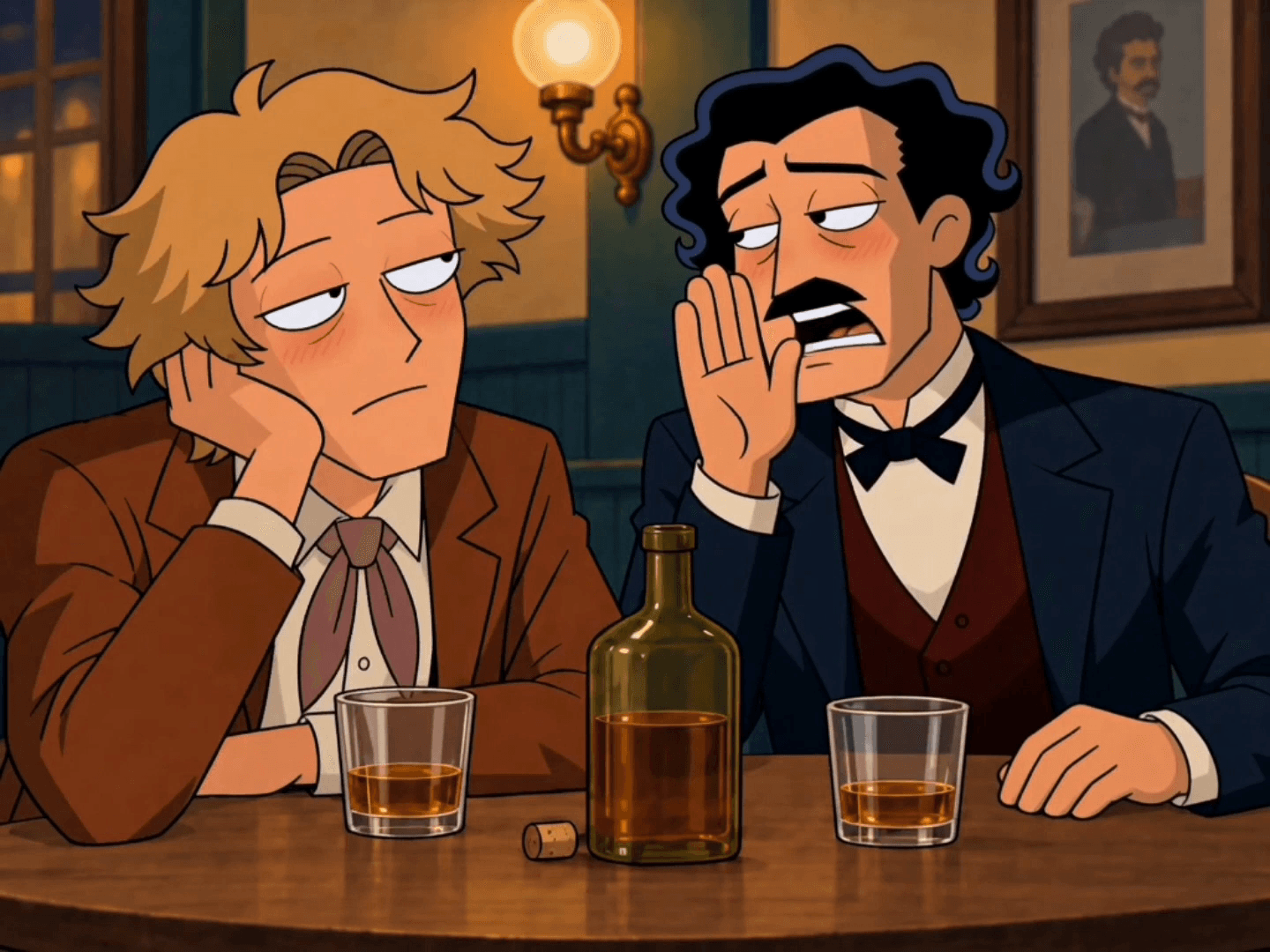
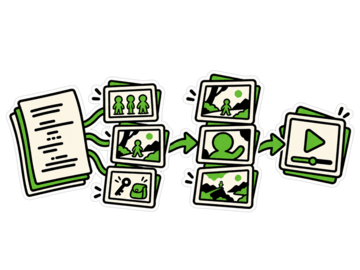
Finished sequence
When creating my show Lab Wars, I wanted the drama surrounding AI companies to look like an anime thriller. I came into the first episode with a clear visual inspiration that I grew up on: Death Note.
The challenge was carrying that direction through the entire show. Recognizable characters, office interiors, and everyday props all needed to belong to the same visual world. But Fringe allows me to carry my visual style all the way from my first character down to my final episode.
Turn your inspiration into a shared direction
I started with three stills from Death Note and told the agent:
The style is inspired by the Death Note anime. Here are three references from the show, use them for all image generation.
The agent recorded the style in the Show Bible and established the stills as show-level references.
The saved direction describes the look in concrete terms: angular linework, bold outlines, a muted palette with selective warm and cool accents, dramatic lighting, and hard-edged shadows.
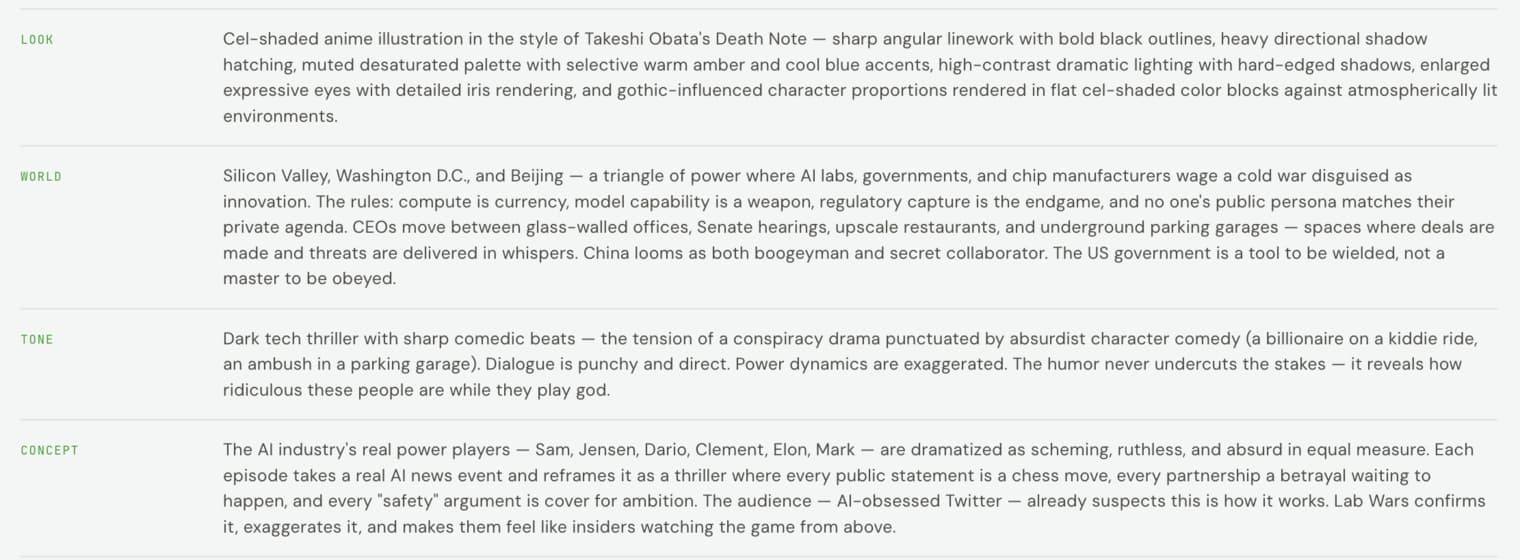
Those details give the agent instructions it can carry into the work. Each shot prompt includes a global style block: the shared description of the show’s visual treatment.
Set the aspect ratio at this stage, too. Lab Wars uses 16:9 for X and YouTube, so the assets and compositions are developed with that frame in mind.
You don’t need to arrive with reference images. You can describe your intended look and ask the agent to explore it. What matters is developing a direction you can recognize and apply consistently.
Tell the agent what each reference is for
Sam Altman’s character took several iterations to get right.
I had the anime references and a photograph of Sam. I needed the character to be recognizable while looking as though he belonged in the show. Early attempts drifted too far toward one reference or the other.
The useful adjustment was to explicitly separate their roles: the Death Note images were for style; Sam’s photograph was for likeness.
The agent could then build the image prompt around those instructions. After testing different models, I found the strongest result for this character with GPT Image 2.
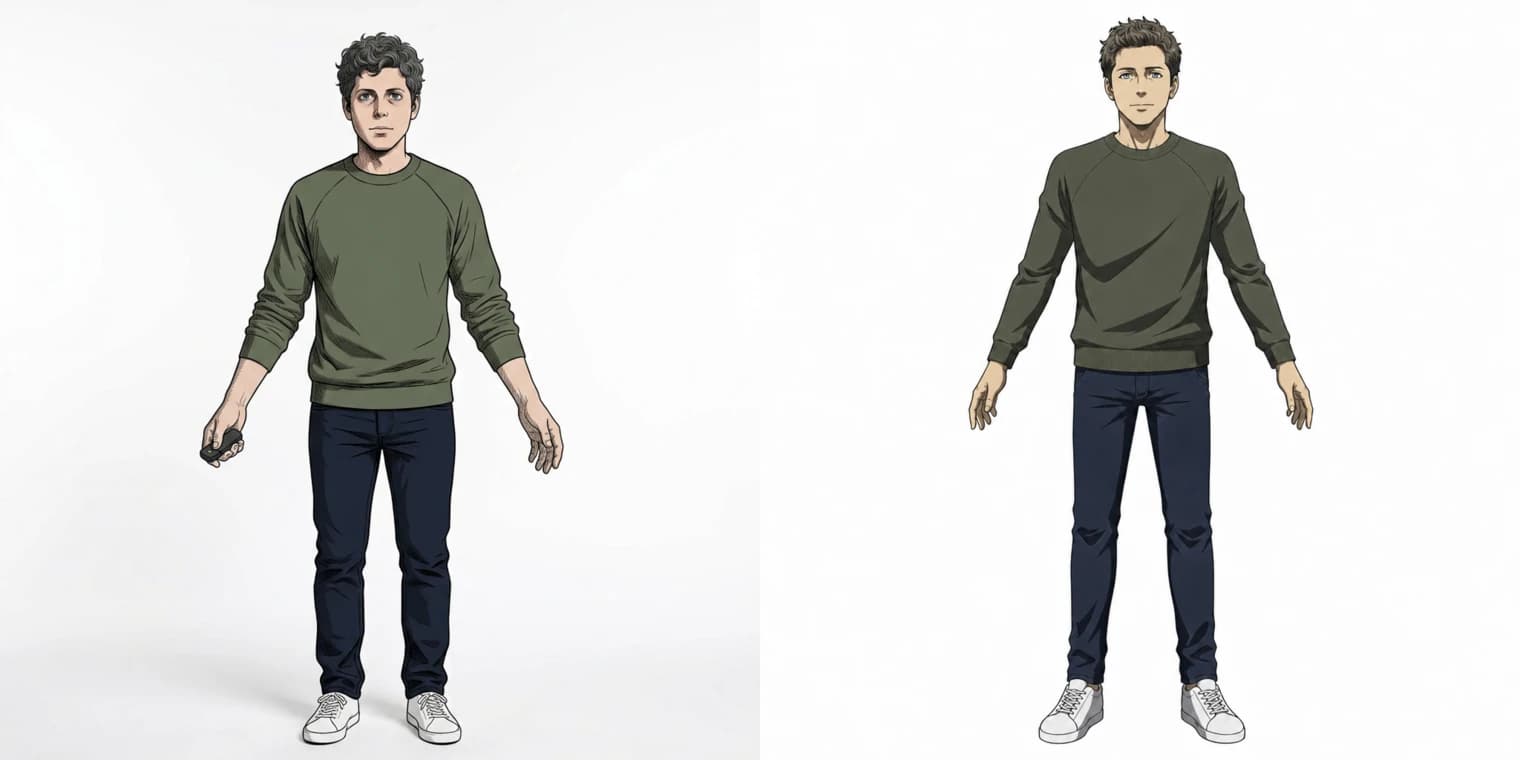
This is a useful habit whenever you combine references. Explain which image supplies the face, which supplies the drawing style, and which details you want preserved. That gives the agent a clearer brief than asking it to combine several images without explaining their purpose.
Refine the character you want to keep
Once Sam’s design was close, I could focus on individual details.
His preferred render included a TV remote in his hand. I used an image edit to remove it while keeping the character design.
That distinction matters during iteration. Sometimes you need to explore a different model or reconsider the overall direction. Sometimes the design works and one detail needs correcting. Tell the agent exactly what to change and what to preserve.
Once your lead characters are established, assess the supporting cast against them. Pay attention to line weight, facial construction, proportions, shading, and detail. The characters should have distinct identities while looking as though they were drawn for the same production.
For changes in wardrobe or appearance, Fringe’s character variants let you develop another version of an established character. You can specify the change while retaining the character’s identity. Anytime you want a variant to be used instead of the base character, just let the agent know.
Bring the whole show into the same style
The same visual direction needs to reach the settings and props.
For Lab Wars, I built those assets around the anime style established at the beginning. When the characters enter a location or interact with an object, the drawing and rendering should feel compatible.
Your global style block contributes to generated shots as well. The references show the designs you chose; the style block describes the visual treatment that should carry through the production.
Review them together. A character sheet can look excellent on its own and still feel out of place against the setting intended for the scene.
You can discover the style along the way
I approached my recent show Trust Fund Time Machine a little differently. Its visual direction emerged from experimenting with a style pack in Midjourney and developing Hunter’s initial character design.
I created the characters there first, then brought them into Fringe and refined them with GPT Image 2. I asked the agent to clean up specific clothing and accessory details and make the drawing style consistent across the cast.
That included checking that one character didn’t have much heavier outlines than another, or a different approach to drawing faces and bodies.
Both routes lead to the same task: establish the look, then bring the production’s assets into agreement with it.
Carry the foundation into the next episode
In Fringe, the Show Bible, style references, characters, settings, and props belong to the show and remain available across episodes. The global style direction carries forward into shot prompts, so the next episode builds on decisions you’ve already made.
You can introduce new locations, add characters, or develop variants without starting the visual identity from scratch.
This is where the initial refinement pays off. The time spent finding Sam’s design helps establish a reusable character and a standard for the rest of Lab Wars. Fringe carries that foundation into production while you focus on directing the next scene.